
Peasants to Puddles
My Family History - By Nicky Rowberry
George Eric Taylor - Private 57103
This page is dedicated to the memory of George Eric Taylor who died on 2nd June 1917 in Belgium.
George Eric Taylor was born in 1895, the son of Thomas William Taylor and Janet Thomas. He died on 2nd June 1917 in Belgium, one of the many millions of men who lost their lives in World War 1. It seemed sad for him to have died and all but these bare facts remembered, so I've tried to find out at least a little about his life and what happened to him in the war.
George was born on 5th September 1895 in Westhide, Herefordshire, to Thomas William Taylor and Janet Thomas, who had married in nearby Ocle Pitchard in 1891. George was the third of 8 children. At the time of George's birth his father was described as a labourer.
In 1901 the family were living in Westhide. George's father Thomas was now described as a market carrier and shopkeeper, working for himself. George was only 5, so not surprisingly no occupation is given; he was presumably at school. The table below gives a transcription from the 1901 census for Westhide.
| The undermentioned Houses are situated within the Boundaries of the | Page 11 | |||||||
| Civil Parish | Ecclesiastical Parish | County Borough etc. | Ward of Municipal Borough | Rural District | Parliamentary Borough or Division | Town or Village or Hamlet | ||
| Westhide Entire | Westhide Entire | Hereford part | Southern of Ross | Westhide | ||||
| No. of Schedule | Road, Street and Name of House | Name and Surname of each person | Relation to Head of Family | Condition | Age | Profession or Occupation | Employer, Worker or Own account | Where Born |
| 16 | Belmont Cottage | Thomas Taylor | Head | Married | 34 | Market Carrier & Shopkeeper | Own account | Westhide Hereford |
| Janet Taylor | Wife | Married | 33 | Ocle Pitchard Hereford | ||||
| Ernest Taylor | Son | 8 | Westhide Hereford | |||||
| Charles Taylor | Son | 7 | " | |||||
| George Taylor | Son | 5 | " | |||||
| William Taylor | Son | 4 | " | |||||
| Winifred Taylor | Dau | 2 | " | |||||
| Dulciemore Taylor | Dau | 2 mos | " | |||||
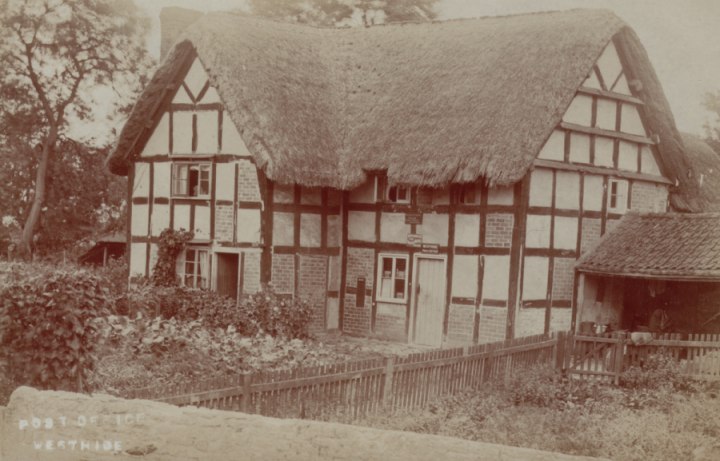
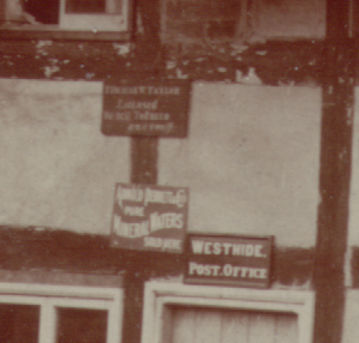
Although it doesn't say it on the census, Thomas was probably the postmaster for Westhide at this time, he was certainly recorded as such later in life. So George may well have grown up at the village post office. The image below shows Westhide post office some time in the early 20th century. In the close up of the sign above the door you can see Thomas' name.
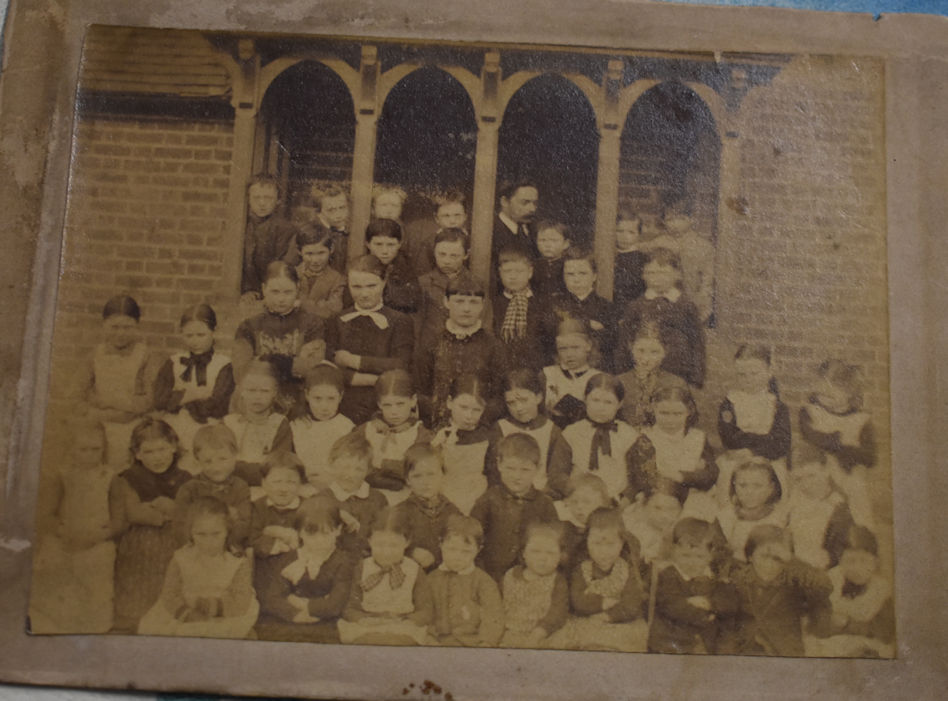
George would have gone to the local school. Although Westhide originally had its own school, by the start of the 1900s, this was only used for Sunday School and the children went to nearby Withington school. The photo below of Withington school is undated, but is probably from sometime between the late 1890s and WW1. George or his siblings may even be amongst the children.
By 1911 George was 16 and working as a servant for a miller in Clehonger. The census doesn't say what he does, but as a young lad he was probably employed doing whatever manual or lifting jobs were needed around the mill. Clehonger was the other side of Hereford, about 10 miles away, so he lived with the miller's family.
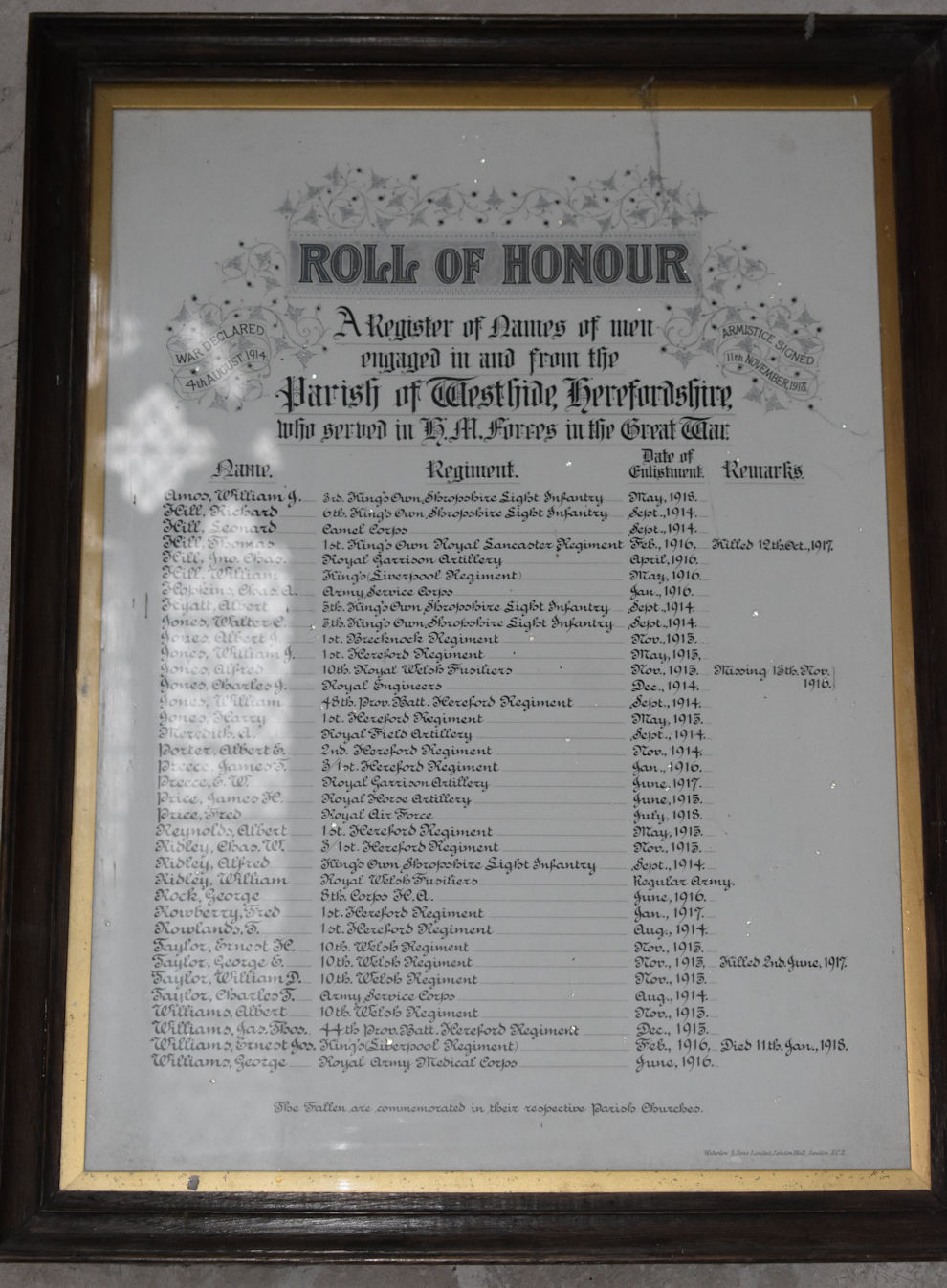
When war broke out in the summer of 1914 one of George's older brothers joined up almost immediately. There is a framed Roll of Honour in Westhide church which lists all the men of the parish who fought in WW1 and also when they enlisted. In November 1915 George, along with his brothers Ernest and William enlisted together. They had almost consecutive regimental numbers (57010 for William, 57012 for Ernest and 57013 for George). All three were initially enlisted in the Montgomery Yeomanry before being transferred to the 10th Battalion of the Welsh Regiment. Thankfully George's brothers all survived the war. The Commonwealth War Grave Commission confirms that George became a Private in the 10th Battalion of the Welsh Regiment, that his service number was 57103 and that he was buried in the Essex Farm Cemetery in Belgium. I can't reproduce the CWGC photo of the cemetery, but to see his page please click here
You can now look at the Medal Roll cards from the first world war online. These show a soldier's name, rank and what medals they were entitled to. Due to copyright issues, I don't think I can reproduce the image of the medal card, so instead I've transcribed it.
| Name | Corps | Rank | Reg No. | |
| Taylor. | Mont Yeo. Welsh. R. | Pte | 3236 57013 | |
| George. | ||||
| Medal. | Roll | Page | Remarks | |
| VICTORY | J/1/104 B20 | 7738 | ||
| BRITISH | ditto | ditto | ||
| STAR | ||||
| Theatre of War first served in | ||||
| Date of entry therein | ||||
The index card indicates that he would have been entitled to two medals. The British Medal was awarded to servicemen who served in a theatre of war between 5th August 1914 and 11th November 1918. The Victory Medal (Allied Victory Medal) was awarded for service in any operational theatre over the same time frame. His military service records don't seem to have survived so I don't know the exact date in November 1915 that he enlisted, but since he doesn't seem to have been eligible for the 1915 Star medal, it suggests he wasn't sent abroad until at least 1916.
George's service records unfortunately haven't survived; millions of WW1 records were burnt during bombing in 1940. So the closest I can get to studying George's time in the army is to look at the War Diaries for his regiment. You can now download most regimental war diaries from WW1, so I've looked at the War Diaries for the 10th Battalion of the Welsh Regiment. George's battalion were heavily involved in fighting at Mametz Wood on the Somme in the summer of 1916. By the beginning of 1917 the battalion was stationed at Poperinghe in Belgium, before being moved by train just north of Ypres. They spent the next couple of months in and out of the trenches around Ypres. The officer who wrote the diaries described the weather as bad and the trenches as very wet, it must have been utterly miserable. At the end of March they were moved to Bollezeele, spending time either in the trenches or training. At the beginning of May 1917 they were moved by train to Brandhoek, before marching to Elverdinghe. The day of George's death is covered by a single line in the war diary, covering 1st-3rd June 1917. The officer wrote "Routine in trenches in Lancashire FM sector." There isn't even any mention of casualties or shelling. George's death didn't get so much as a footnote in the diary. George was buried at Essex Farm Cemetery just a few miles from Elverdinghe.
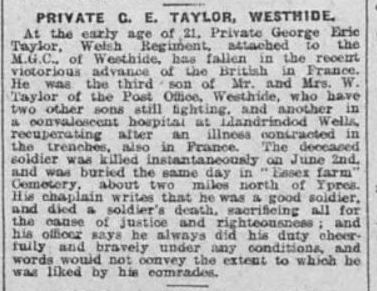
George's death was reported in the local newspaper, Hereford Times 16 Jun 1917. Image below, thanks to the Herefordshire History website.
The last piece of evidence for George is the Army Register of Soldiers' Effects. This showed his possessions consisted of just £6.10, which was the war gratuity. This paltry amount was paid to his father.
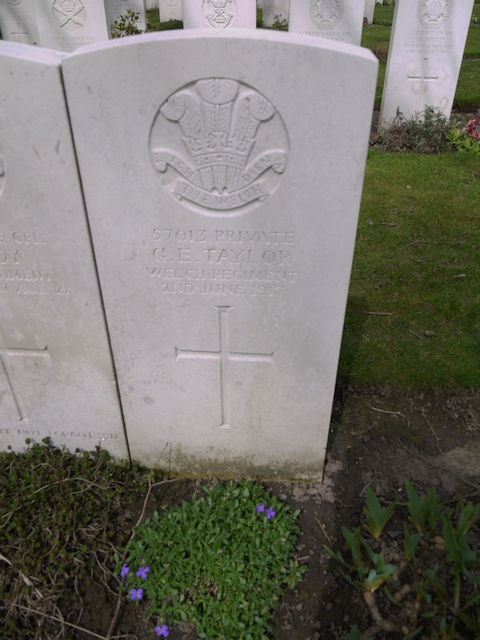
George is buried in the Essex Farm Cemetery in Belgium. Thanks to Michael E. Bridgestock on the Remembering The Dead of WW1 website I have this image of his gravestone.
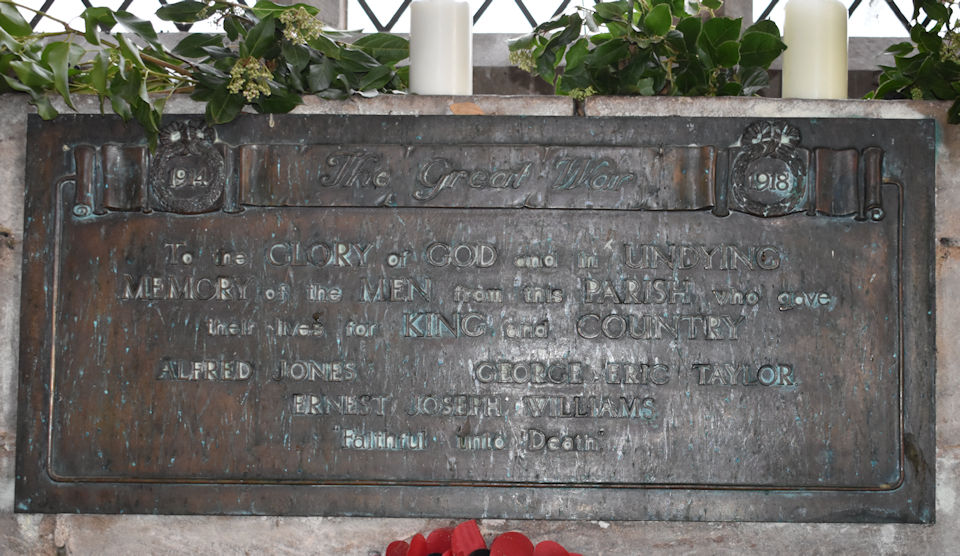
George is remembered on a plaque for the men from the parish who died in WW1 and on a Roll of Honour for all those who served, both located in Westhide church.
George came from a large family, so there are hopefully some descendants who may even have a photo of George. So if there are any relatives out there, please do get in touch, it would be lovely to hear from you. Please feel free to contact me at: n.rowberry@btinternet.com
In researching George's final days, several sites have been invaluable, so I've included links to some of them here.
The Commonwealth War Graves Commission is a great site to start with to give you the basic details you would need to then start digging deeper:

The National Archives at Kew now hold a huge number of records, many of which are available online, but it is well worth a visit down there if you can make it:

The British Newspaper Archive holds digitised images of newspapers from all over Britain. New pages are added weekly and it can be a great way of adding to your research:


If any of the above is of further interest, please feel free to contact me at: n.rowberry@btinternet.com
© Nicky Rowberry 2022
Thank you for visiting my site. You are visitor number:
Peasants to Puddles - My Family History. By Nicky Rowberry